
How to Improve Gut Health Naturally: A Complete Guide
Table of Contents
- Understanding Your Microbiome and Digestive Health
- Foods for Gut Health That Actually Work
- Probiotics vs Prebiotics for Digestion: What Your Gut Needs
- How to Reduce Gut Inflammation Naturally
- Signs of an Unhealthy Gut and What They Mean
- The Gut-Brain Axis: How Stress and Sleep Impact Your Digestive System
- Practical Steps to Improve Gut Health Naturally
- Frequently Asked Questions
Last Updated: September 29, 2026
Understanding Your Microbiome and Digestive Health
Your microbiome is a living ecosystem of trillions of bacteria, fungi, and other microorganisms that live primarily in your digestive tract. These microbial communities directly influence everything from nutrient absorption to immune function to mood regulation. When your microbiome is balanced and diverse, it supports optimal digestive health and overall wellness. When it becomes imbalanced, a condition called dysbiosis, inflammation, digestive discomfort, and systemic health issues often follow.
Your gut bacteria produce essential nutrients like B vitamins and vitamin K, synthesize short-chain fatty acids that nourish your intestinal lining, and communicate with your brain through the enteric nervous system, affecting mood, stress response, and sleep quality.
Understanding how to improve gut health naturally starts with recognizing that your microbiome responds directly to the choices you make daily. Diet, stress management, sleep, physical activity, and even medication use shape which microbes thrive and which decline. The good news: these are all factors you can control.
Foods for Gut Health That Actually Work
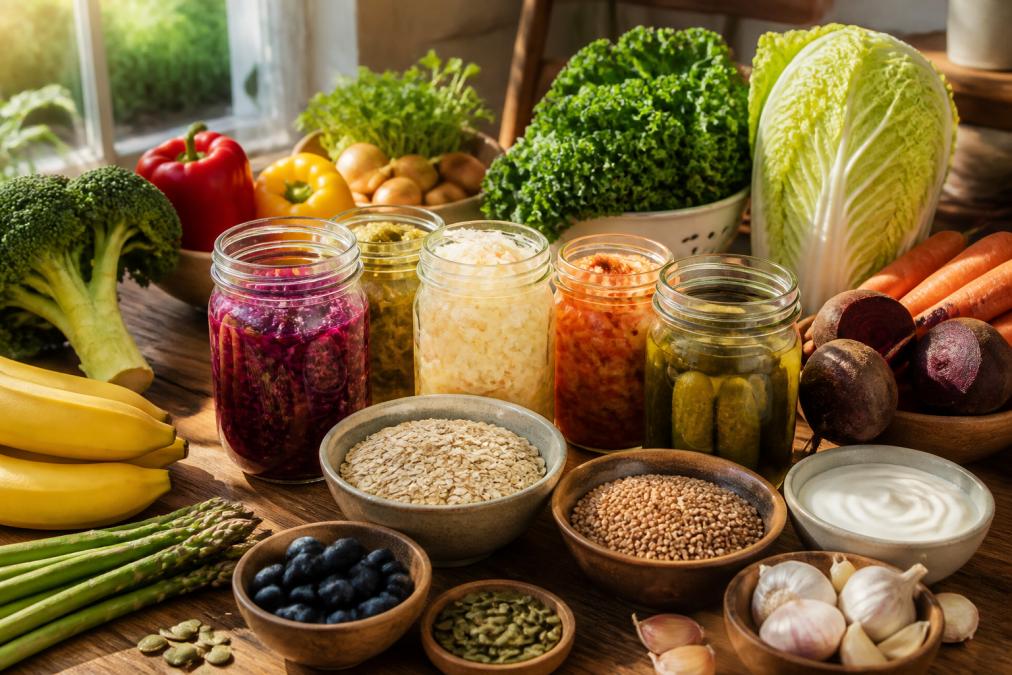
The foods you eat are the primary fuel source for your microbiome. Certain foods feed beneficial bacteria while others feed harmful species, a distinction most nutrition advice ignores.
Fiber-rich whole foods feed your gut bacteria, which ferment the fiber into short-chain fatty acids that reduce inflammation and strengthen your intestinal barrier. Most people consume far less fiber than needed. Add one fiber-rich food per day to prevent bloating and allow bacteria to adjust.
Fermented foods like sauerkraut, kimchi, kefir, and yogurt contain live beneficial bacteria and enzymes that improve nutrient absorption. Unlike probiotic supplements, they provide bacteria with food sources that help them survive to your colon.
Plant diversity matters most: 30 different plant foods weekly supports greater microbial diversity than 10 repeated foods. Seasonal eating naturally increases variety.
Polyphenol-rich foods like berries, dark leafy greens, nuts, and green tea feed beneficial bacteria that produce anti-inflammatory compounds.
Probiotics vs Prebiotics for Digestion: What Your Gut Needs
Probiotics are live beneficial microorganisms; prebiotics are food compounds that feed them. Both matter, but they work differently.
Probiotics introduce new bacterial strains, though research on specific strains is mixed.
Prebiotics fuel existing beneficial bacteria. Inulin (garlic, onions), beta-glucans (oats, barley), and pectin (apples, citrus) are common prebiotic compounds.
The practical approach: focus on prebiotics first through whole foods, then add fermented foods for their probiotic content. If you're recovering from antibiotic use or have diagnosed dysbiosis, targeted probiotic supplementation may help, but it's not a substitute for dietary changes. At Dr. Kate's Best, we recognize that sustainable gut health comes from feeding your existing microbiome through whole foods rather than relying on supplements alone.
How to Reduce Gut Inflammation Naturally
Gut inflammation is the root cause of most digestive complaints. When your intestinal lining becomes inflamed and permeable ("leaky gut"), partially digested food particles cross into your bloodstream, triggering systemic inflammation affecting joints, skin, mood, and energy.
Ultra-processed foods drive gut inflammation: seed oils, added sugars, artificial additives, and refined carbohydrates feed inflammatory bacteria while starving beneficial ones. Read ingredient labels carefully.
Remove inflammatory foods first, then add anti-inflammatory ones: omega-3s from fish and flaxseeds, polyphenols from berries and green tea, and bone broth for intestinal repair.
Eating slowly, chewing thoroughly, and maintaining regular meal timing reduce inflammatory stress on your gut.
Signs of an Unhealthy Gut and What They Mean
Chronic bloating, constipation, loose stools, or foul-smelling gas indicate dysbiosis and poor bacterial fermentation.
Brain fog, mood swings, and anxiety signal gut-brain axis dysfunction: dysbiosis reduces neurotransmitter production, affecting mental clarity and emotional stability.
Unexplained food sensitivities and skin issues like acne or eczema correlate with gut dysbiosis and intestinal permeability.
Fatigue despite adequate sleep indicates malabsorption and reduced production of short-chain fatty acids that fuel your intestinal cells.
The Gut-Brain Axis: How Stress and Sleep Impact Your Digestive System
The gut-brain axis is bidirectional communication between your enteric nervous system and central nervous system. Your mental state shapes digestive function, and gut health shapes mood and stress resilience.
Chronic stress suppresses beneficial bacteria and promotes pathogenic species. Cortisol increases intestinal permeability, and dysbiosis develops as pathogenic bacteria flourish.
Sleep deprivation dysregulates your microbiome's circadian rhythm. People sleeping less than 6 hours nightly have less microbial diversity than those sleeping 7-9 hours, and poor sleep increases intestinal permeability.
Dysbiosis impairs sleep by reducing GABA and melatonin production, creating a cycle where poor sleep worsens dysbiosis. Break this cycle by addressing stress, sleep, and diet simultaneously.
Stress management (meditation, breathwork, time in nature) and 7-9 hours of consistent sleep restore circadian rhythm to your gut bacteria and are as important as food choices for improving gut health naturally.
Practical Steps to Improve Gut Health Naturally
Implement changes systematically rather than all at once. Overhauling your diet overnight causes temporary bloating and fatigue as pathogenic bacteria die. A gradual approach allows your microbiome to adapt.
Step 1: Assess Your Current Diet (Week 1) Write down what you eat for three days without changing anything. Look for patterns: How much fiber are you consuming? How many processed foods? How many plant foods? This baseline shows you where dysbiosis likely originated and where to focus first.
Step 2: Remove the Most Inflammatory Foods (Weeks 2-3) Eliminate added sugars, seed oils, and ultra-processed foods first. These feed pathogenic bacteria and drive inflammation. You don't need to be perfect, removing 80% of these foods produces significant results. Replace them with whole foods: meat, fish, eggs, vegetables, fruits, nuts, seeds, legumes, and whole grains.
Step 3: Increase Fiber Gradually (Weeks 4-6) Add one fiber-rich food per day. Start with cooked vegetables, which are easier to digest than raw. Move toward raw vegetables and fruits as your microbiome adapts. Include whole grains and legumes. Increase gradually to avoid bloating, your bacteria need time to adjust to their new food source.
Step 4: Add Fermented Foods (Week 3 onward) Introduce one fermented food daily: sauerkraut, kimchi, kefir, or yogurt. Start with a small serving, a few tablespoons, and increase gradually. These foods introduce beneficial bacteria and enzymes that improve digestion.
Step 5: Optimize Sleep and Stress (Ongoing) Establish a consistent sleep schedule. Aim for 7-9 hours nightly at the same time each night. Implement a stress management practice: 10 minutes of meditation, a 20-minute walk, or breathwork. These changes take 2-3 weeks to show effects on your microbiome, but they're non-negotiable for sustained improvement.
Step 6: Consider Targeted Support (Week 4-6 onward) If you've made dietary and lifestyle changes for 4-6 weeks and still experience significant bloating, irregular digestion, or brain fog, targeted supplementation may help.
| Strategy | Timeline | Key Focus |
|---|---|---|
| Remove inflammatory foods | Weeks 1-3 | Eliminate added sugars, seed oils, ultra-processed foods |
| Increase fiber gradually | Weeks 4-6 | Add one fiber-rich food daily; start cooked, progress to raw |
| Add fermented foods | Week 3 onward | Introduce sauerkraut, kimchi, kefir, or yogurt daily |
| Optimize sleep and stress | Ongoing | Target 7-9 hours nightly; implement daily stress management |
| Consider targeted support | Week 4-6+ | Add professional-grade digestive support if needed |
Frequently Asked Questions
What are the main signs of an unhealthy gut?
Common signs include chronic bloating, irregular bowel movements, persistent constipation or diarrhea, unexplained fatigue, brain fog, food sensitivities, skin issues, and frequent infections. Your gut microbiome affects nutrient absorption and immune function, so digestive problems often show up as systemic symptoms. If you experience multiple signs simultaneously, it may indicate dysbiosis, an imbalance in your gut bacteria that benefits from dietary and lifestyle adjustments.
How do probiotics and prebiotics work differently for digestion?
Probiotics are live beneficial bacteria that colonize your gut and support digestive function and immune health. Prebiotics are fiber compounds that feed existing beneficial microbes, helping them thrive. You need both: probiotics introduce helpful strains, while prebiotics create an environment where they flourish. Fermented foods like yogurt and sauerkraut provide probiotics, while foods rich in inulin and resistant starch (onions, garlic, green bananas) supply prebiotics.
Can I improve my gut health in just 7 days?
You can start seeing improvements in bloating and regularity within a week by eliminating ultra-processed foods, adding fiber gradually, and staying hydrated. However, meaningful changes to your microbiome composition and repair of the gut lining typically take 4-12 weeks of consistent dietary and lifestyle changes. Focus on eliminating inflammatory triggers, adding fiber-rich whole foods, managing stress, and ensuring adequate sleep for sustainable results.
How does stress damage gut health and what can I fix it?
Stress activates your enteric nervous system, the 'second brain' in your gut, reducing beneficial bacteria and increasing inflammation. This gut-brain axis connection means chronic stress directly impairs digestion and nutrient absorption. Manage stress through regular physical activity, sleep hygiene (7-9 hours nightly), meditation, or breathing exercises. These practices calm your nervous system, restore microbial balance, and improve gut motility naturally without medication.
Which foods should I avoid if I'm trying to heal my gut?
Avoid ultra-processed foods, added sugars, and refined grains, which feed harmful bacteria and promote inflammation. Limit alcohol and artificial sweeteners, which damage the gut lining. Reduce foods you're sensitive to (common triggers include gluten, dairy, or seed oils). Focus instead on whole foods: vegetables, fruits, legumes, fish, nuts, and fermented foods. If you have specific food sensitivities, consider personalized nutrition testing to identify your individual triggers.
Do I need supplements to improve my gut health naturally?
A whole-food-first approach, fiber-rich vegetables, fermented foods, and adequate hydration, forms the foundation. However, supplements can accelerate healing, especially if you have dysbiosis, food sensitivities, or absorption issues. Quality probiotics, prebiotics, and botanicals support the process, but they work best alongside dietary changes and stress management. Consult a healthcare provider before starting supplements, particularly if you take medications, as some interact with digestive support products.
What role does the gut-brain axis play in digestive health?
Your enteric nervous system communicates directly with your brain through the vagus nerve, controlling digestion, immune response, and even mood. Chronic stress signals travel down this axis, reducing beneficial bacteria and increasing gut permeability. This bidirectional connection means that calming your nervous system through sleep, exercise, and stress reduction directly improves your microbiome health and digestive function.